

How a Tachometer Filter Works and When It Will Help
This post explains what a tachometer filter does, how it works, and whether it may help in your application.
How a tachometer filter works:
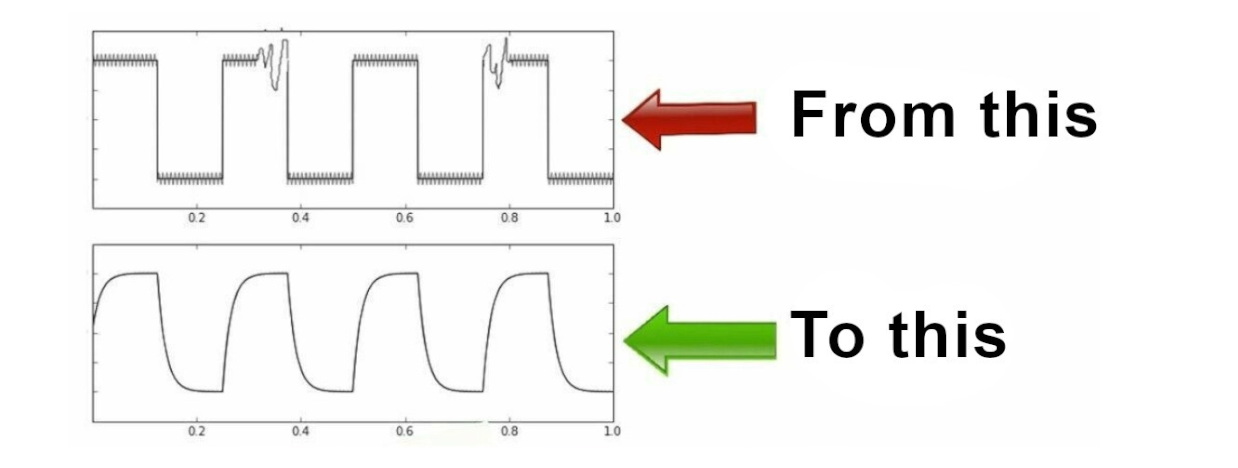
A tachometer filter is designed to reduce high-frequency electrical noise on the tach signal line while allowing the lower-frequency tach signal to pass through. In simple terms, it helps remove unwanted spikes and interference that can cause unstable or inaccurate tachometer readings.
This type of filter works as a low-pass electronic filter. A low-pass filter passes signals below its cutoff frequency with minimal attenuation and increasingly reduces signals above that cutoff. The cutoff frequency is commonly referenced at the -3 dB point, where signal power is reduced by half.
In tachometer applications, the goal is to reduce high-frequency noise and voltage spikes without significantly affecting the intended tach signal.
General Motors used tachometer signal filters on many vehicles from the 1970s through the early 1990s.
Will it work for my application?
A tachometer signal filter is intended to reduce noise on a compatible tach signal. It will not correct problems caused by failing tachometers, incorrect calibration, mismatched components, or incompatible ignition outputs.
Our filters are designed to operate within the 1-800 Hz range, which covers many GM tachometer applications from the 1970s through the early 1990s.
If you are using an aftermarket ignition system, its tach output must fall within this supported range. Your tachometer must also be designed to work with a signal in that range. If both the ignition output and tachometer signal requirements are compatible, the filter may help reduce noise in your application.
Important: A tach filter is a noise-reduction device. It is not a universal fix for all tachometer problems.
Looking for a filter? Here is a link to the tachometer filters we currently offer.